
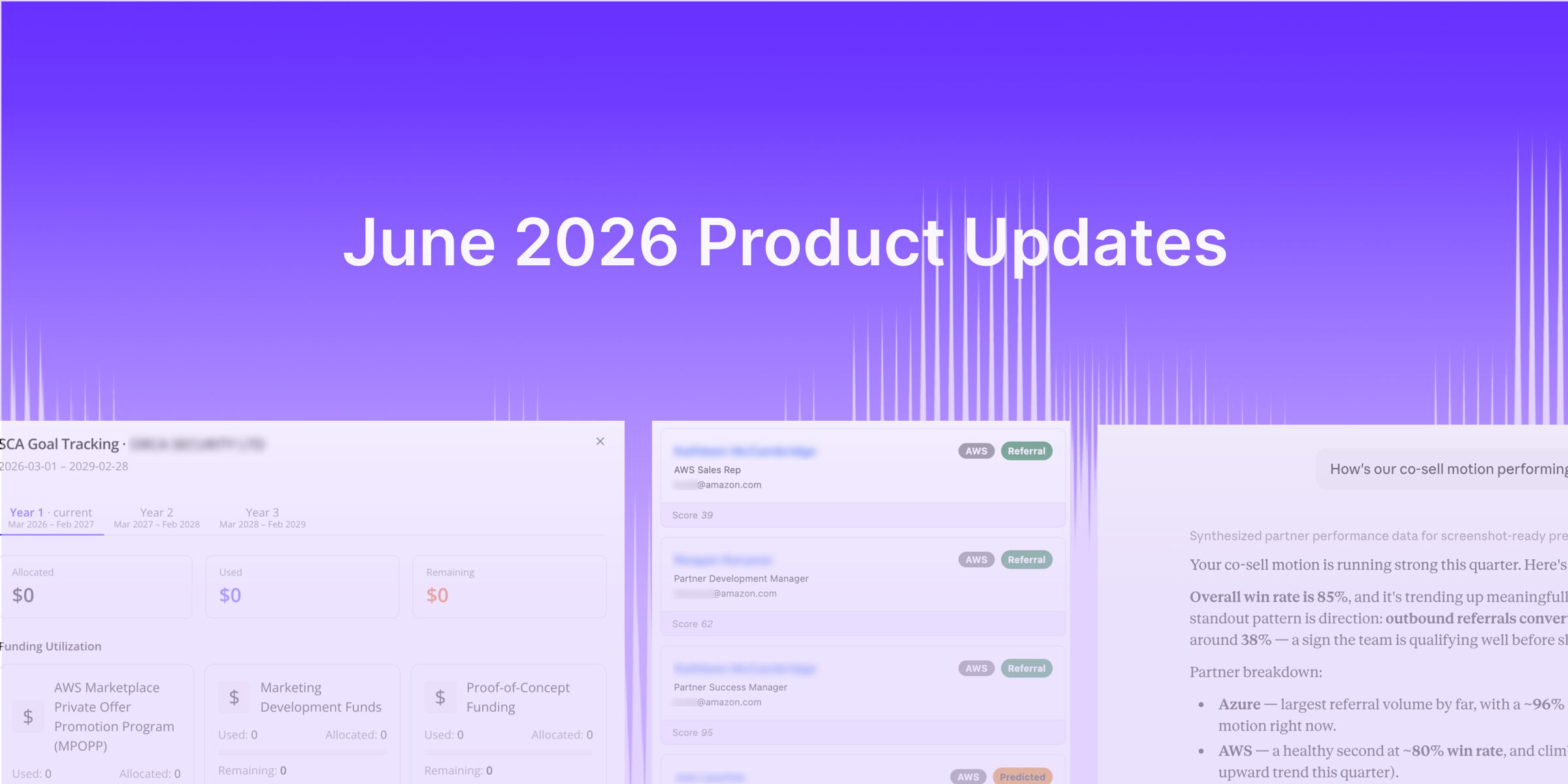
The Suger Co-Sell MCP, Collaboration Score in the Salesforce widget and account mapping list, an AI prompt generator for field mapping, SCA goal tracking, and support for AWS Bedrock, Google Vertex AI, and Azure AI Foundry.
This month, Suger shipped updates across co-sell, account intelligence, field mapping, marketplace goal tracking, and where your AI products get sold. The theme running through all of it: take the parts of the cloud GTM motion that still live in separate tools or manual work, and move them into the systems your team already runs deals from.
Here’s what’s new.
Suger Co-Sell MCP: Run your co-sell motion inside your AI tools
Last month Suger launched the MCP Server, exposing the full Suger API to any Model Context Protocol–compatible client. This month, the co-sell motion gets its own dedicated surface.
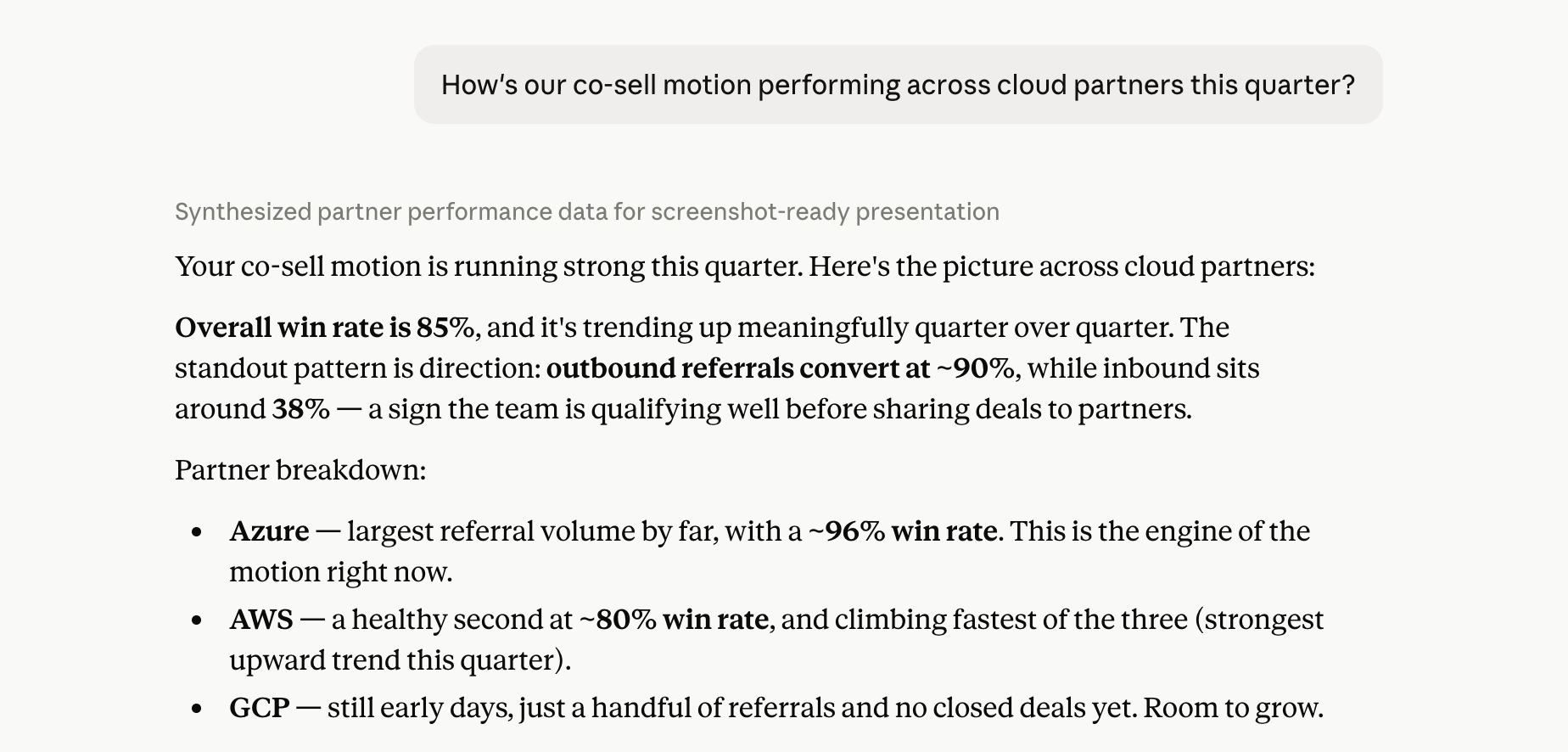
The Suger Co-Sell MCP puts referral operations directly into Claude Desktop, Claude Code, Cursor, VS Code, Windsurf, ChatGPT, or any other MCP-compatible client. Instead of opening the console or the CRM to work a referral, your team can drive the whole motion in natural language.
What that looks like in practice:
- “Draft an outbound co-sell referral for the Acme opportunity and share it to AWS”
- “Show me every inbound referral pending acceptance”
- “Which referrals are stuck, and why?”
- “Sync the latest co-sell status back to Salesforce”
Alliance and co-sell teams don’t live in an IDE the way engineers do — but they increasingly live alongside an AI assistant. The Co-Sell MCP meets them there, so working a referral doesn’t mean context-switching into yet another tab.
Collaboration Score, now visible where you work the account
Suger’s Co-Sell Metrics Dashboard already ranked cloud partner contacts by referral volume. But volume is a blunt signal — a contact racking up low-value touches can outrank the one actually moving deals forward. The Collaboration Score fixes that.
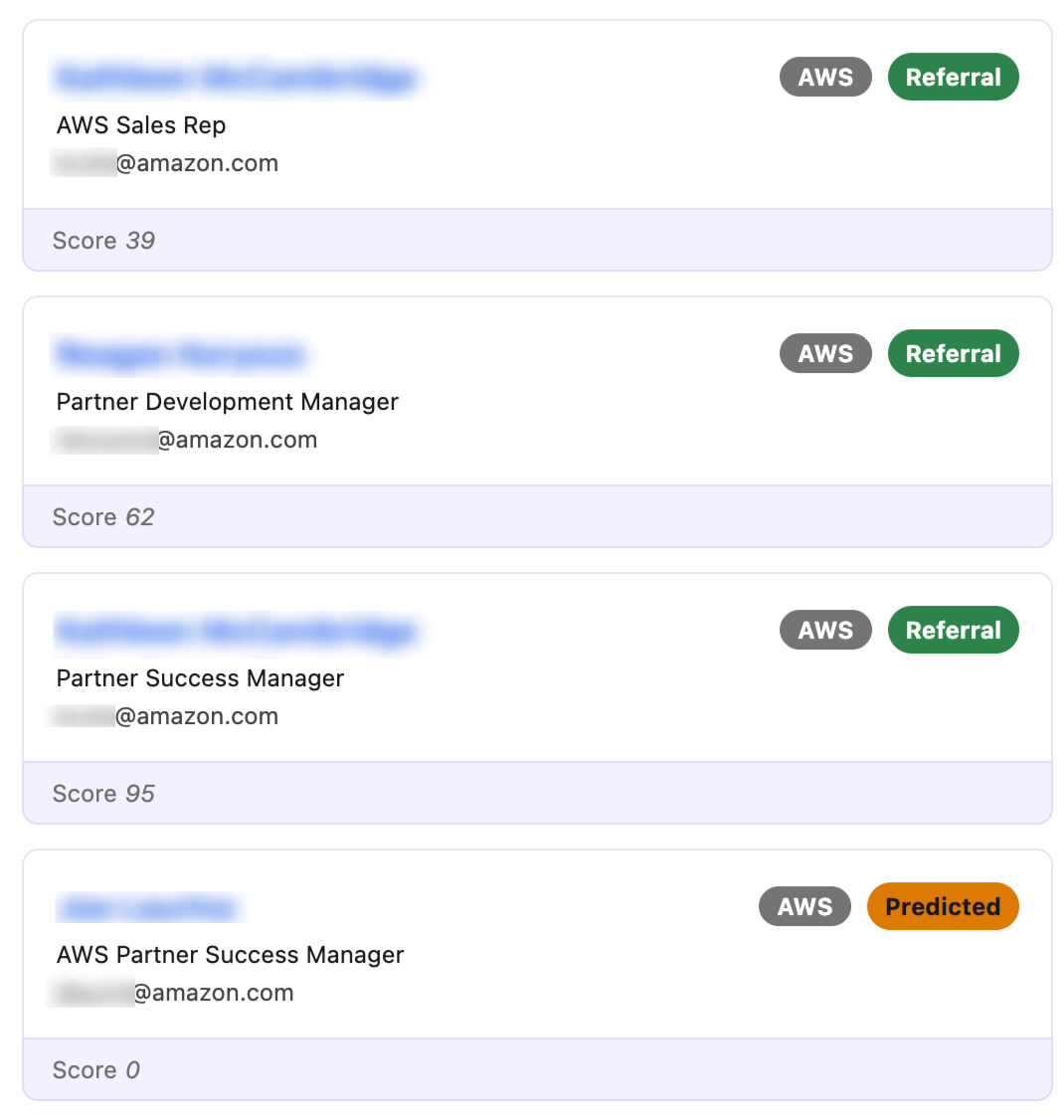
The Collaboration Score grades each cloud contact on the quality of their engagement, not just how often they show up. It weighs the substance of the interactions rather than raw activity count, so the contacts genuinely driving the relationship rise to the top. The score surfaces in three places:
- Salesforce widget: The score appears inline on the record, so an AE can see which cloud contact actually matters on the deal without leaving Salesforce.
- Account mapping list: Scores render across the list view, so Partner Ops can sort and prioritize contacts by engagement quality at a glance.
- Cloud rep profile: The score sits alongside the rep’s co-sell history, giving context on the strength of the relationship an AE is inheriting.
Ranking by quality instead of volume changes who your team invests in — surfacing the cloud contacts worth deepening, and flagging the ones who look active but aren’t.
AI Field Mapping: Generate a mapping rule from a one-line prompt
Suger’s AI mapping engine already supports four modes for translating CRM fields into a marketplace’s required format — Direct, Expression, Default Value, and AI Generate. Configuring each field still meant choosing the mode and defining the rule. This month adds a shortcut.
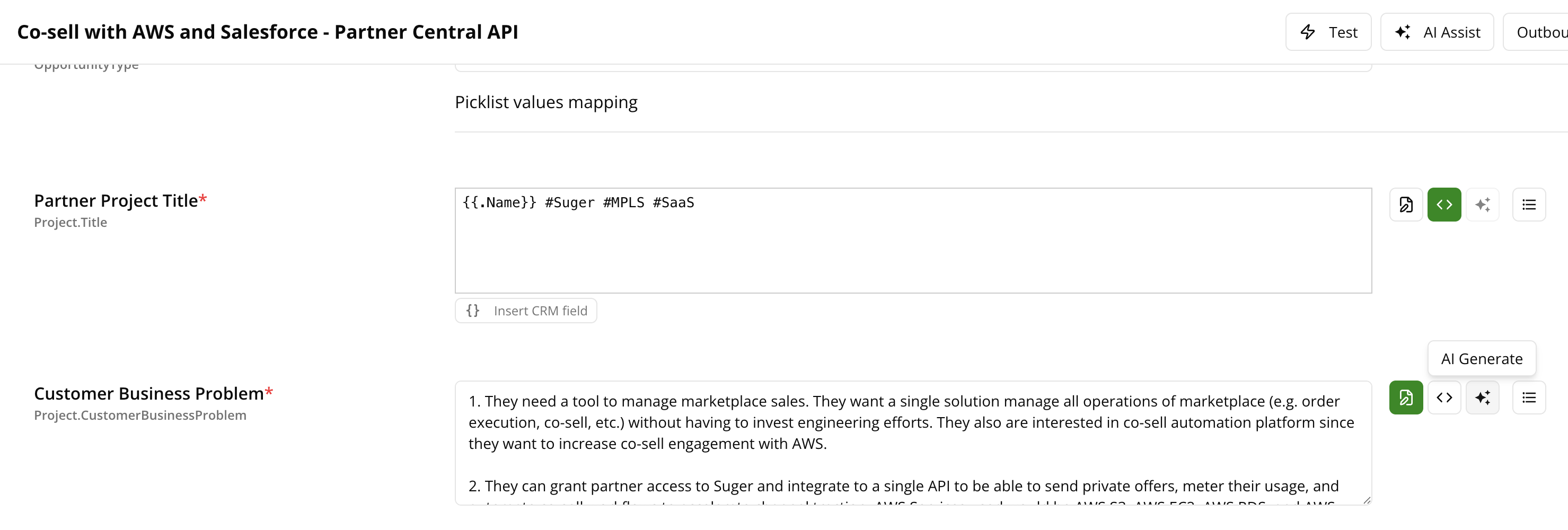
The new Prompt Generator builds the mapping rule for you. Describe the field you want in a single prompt, and Suger generates the rule — picking the appropriate mode, wiring the source fields, and handling the transformation logic. Instead of configuring the mapping by hand, you describe the outcome and refine what comes back.
Setup time on every new integration drops again, and the rules land in a format that’s still fully editable — the generator gives you a starting point, not a black box.
SCA Tracking: See your marketplace commitment progress for the year
Partners with a Strategic Collaboration Agreement carry annual marketplace commitments, but tracking progress against those goals has meant exporting revenue data and reconciling it against the agreement by hand.
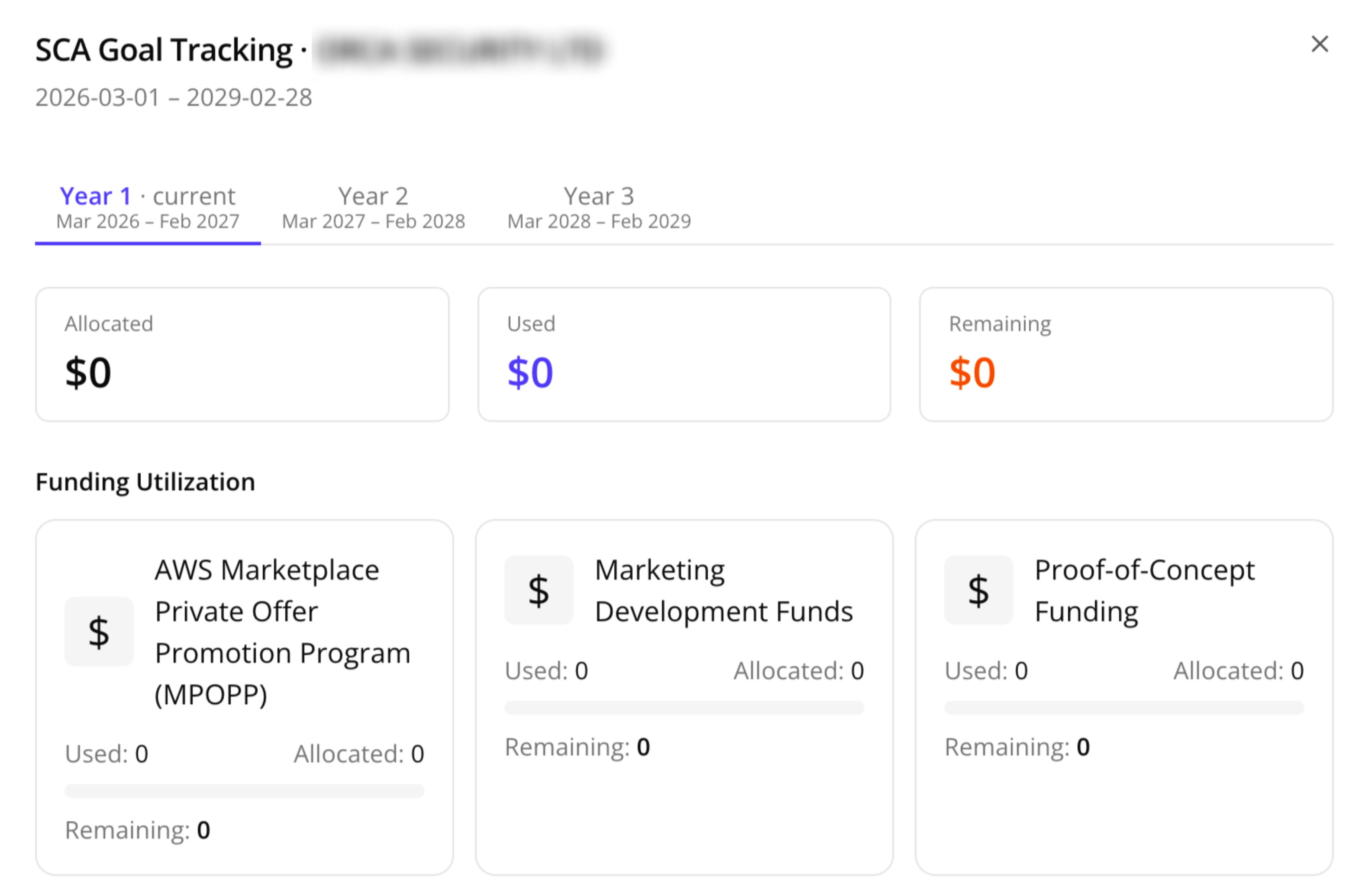
SCA Tracking calculates your marketplace goal for the year and tracks attainment against it inside Suger. You get a running view of committed target versus realized marketplace revenue, so alliance and finance teams know where they stand against the SCA without building the report themselves.
For teams whose partner tier and funding access depend on hitting those numbers, this turns a periodic reconciliation exercise into a number that’s always current.
AWS Bedrock, Google Vertex AI, and Azure AI Foundry support
The marketplace motion is expanding to where AI products actually get distributed. Suger now supports AWS Bedrock, Google Cloud Vertex AI, and Microsoft Azure AI Foundry.

For ISVs bringing models and AI agents to market, these are the channels buyers are increasingly starting from. Suger brings them into the same platform you already use to run listings, offers, and billing across the AWS, Azure, and GCP marketplaces — so a new distribution surface doesn’t become a new operational silo.
A lot shipped this month, and these capabilities are available for Suger customers now! If you want to see how any of them fit into what you’re running today, book a demo.
Stay Updated
Get the latest Cloud GTM insights, product updates, and marketplace strategies delivered to your inbox.